Are packing cubes worth it?
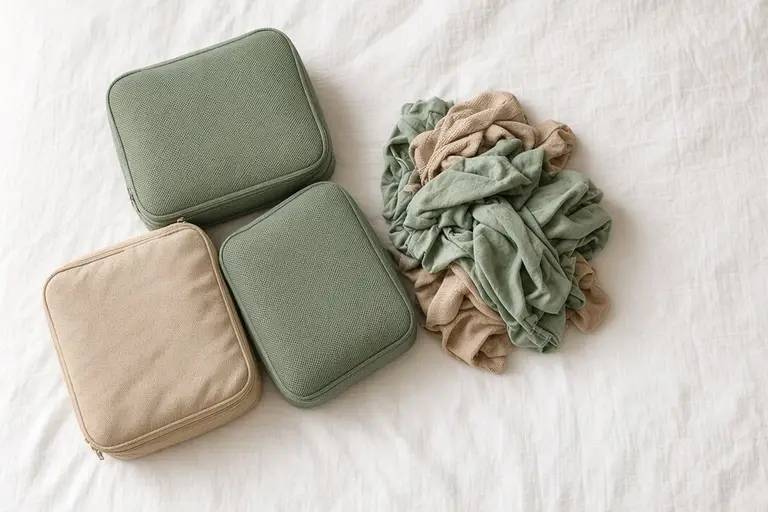
Packing cubes are zippered fabric boxes that sort your clothes inside your bag. They don't create space out of nothing. What they do is keep things in order, and for a lot of trips that's worth it.
What cubes solve
- Finding things. Tops in one cube, bottoms in another, underwear and socks in a small one. You open the cube you need instead of digging.
- Unpacking and repacking. Lift the cubes into a drawer on arrival and back into the bag when you leave. That helps most on trips with several stops.
- Sharing a bag. One color per person makes a shared suitcase easy to sort.
- Separating clean from dirty. Use one cube or a laundry bag for worn clothes.
- Security checks. If your bag gets opened, it's quicker to put a few cubes back than a pile of loose clothes.
When to skip them
- Very short trips with only a few items.
- A tight weight limit. Each cube adds its own fabric and zipper weight. Check the product listing for weight.
- Backpacks with an odd shape. Rigid rectangles don't always fill a tapered bag well. Stuff sacks or a single cube can work better.
- You already pack neatly. If rolling and tucking works for you, cubes are a nice-to-have, not a must.
Compression vs regular
| Regular cubes | Compression cubes | |
|---|---|---|
| How they work | Zip closed around your clothes | A second zipper squeezes the cube thinner once it's closed |
| Best for | Organizing, mixed items, structured clothes | Soft, bulky things like knits, fleece and T-shirts |
| Watch for | Overstuffing strains the zipper | Smaller doesn't mean lighter: the weight is the same, so check your airline's weight limit |
| Wrinkles | Fewer if you fold | More, because clothes are pressed tighter |
Not sure which to get? Start with regular cubes, and add one compression cube for your bulkiest layer.
Sizes
Cubes usually come in sets of mixed sizes. Sizes aren't standard between brands, so check the dimensions against your bag before you buy.
- Large: pants, sweaters or a week of tops. In a carry-on, one large cube can take up a big share of the space.
- Medium: the most useful size for most trips. Tops, shorts or a kid's full outfit set.
- Small: underwear, socks, swimwear and chargers.
- Slim or extra-small: cables, toiletries that aren't liquids, documents or accessories.
For a carry-on: one medium and one or two small cubes, plus your liquids bag, is a good starting point for many travelers.
For a family: a different color for each person, plus one shared cube for swimwear or a spare change of clothes for each child.
What to look for
- Dimensions that fit your bag when placed side by side.
- A sturdy zipper. It's the first thing to fail when you overstuff a cube.
- Mesh or a clear panel if you want to see what's inside without opening it.
- A grab handle for lifting cubes out of a deep bag.
- Weight per cube, if you fly with weight limits.
- Washable fabric you can wipe down or launder.
Product table
| Type | Good for | What to check |
|---|---|---|
| Regular cube set (mixed sizes) | Most trips, families, multi-stop trips | Dimensions vs your bag, zipper quality |
| Compression cube set | Cold-weather layers, carry-on trips | Weight, the compression zipper, wrinkle-prone fabrics |
| Small or slim cubes | Underwear, socks, cables, chargers | Mesh panel, size |
End kit
Packing cubes are on the generator's list for carry-on, city, beach, business, digital nomad and family trips. Build your list, then decide which cubes the list needs.
FAQ
Are packing cubes worth it? For most multi-stop or shared-bag trips, yes. They don't create space, but they keep things sorted and make unpacking and repacking quick.
When should I skip packing cubes? On very short trips with few items, with a tight weight limit (each cube adds weight), with oddly shaped backpacks, or if you already pack neatly.
Compression cubes or regular cubes? Start with regular cubes and add one compression cube for your bulkiest layer.